Children learn far more from everyday family life than they do from formal lessons alone. Conversations at the dinner table, helping with household responsibilities, visiting new places, and watching parents solve problems can all become opportunities to develop practical skills. Even ordinary routines can teach children about responsibility, communication, safety, kindness, independence, and decision-making.
Parents do not need to create a structured lesson for every experience. Instead, they can involve children in age-appropriate activities and explain why certain choices matter. Over time, these small moments can help children understand how to care for themselves, contribute to their families, and interact thoughtfully with the world around them.
In this article, we’ll explore everyday experiences that can help children develop valuable life skills and learn lessons that extend well beyond childhood.
Teach Responsibility Through Household Tasks
Household responsibilities are a natural way to teach children that everyone contributes to a shared environment. Even young children can participate in age-appropriate tasks, such as putting away toys, feeding pets, sorting laundry, or helping clear the table.
As children grow, their responsibilities can become more involved. They might learn to organize their belongings, prepare simple meals, clean their rooms, or help with basic outdoor chores. These activities teach more than how to complete a particular task. They can also demonstrate the connection between effort and results.
Parents can make these responsibilities more meaningful by explaining why they matter. A child who learns to put away their belongings may begin to understand organization. A child who helps clean a shared space can recognize that maintaining a home is a collective responsibility.
Encourage Curiosity About Learning
Children naturally encounter different learning environments as they grow. Parents can encourage curiosity by asking questions, listening to children’s interests, and allowing them to explore subjects that capture their attention.
School can provide an important foundation, but learning does not stop when children leave the classroom. Visiting a library, exploring nature, working on a craft, or reading together can encourage children to ask questions and seek answers.
Families considering educational options can also discuss what children need from their learning environment. A Montessori elementary school, for example, may introduce children to an educational approach that emphasizes independence and hands-on learning.
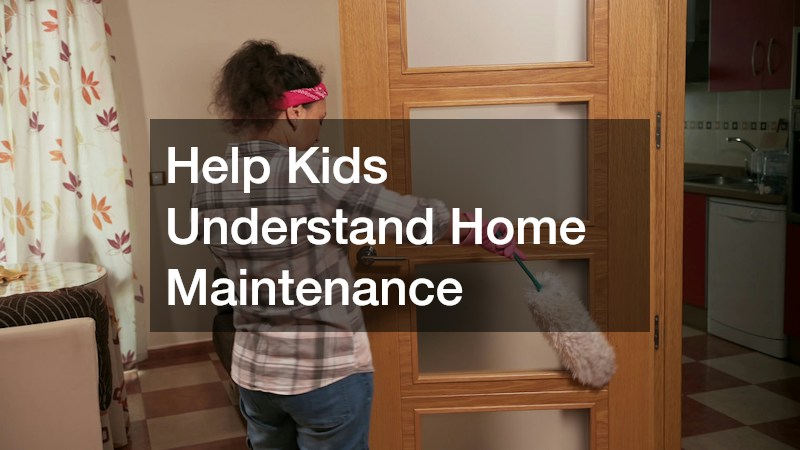
Help Kids Understand Home Maintenance
A home provides countless opportunities to teach practical skills. Children can learn that appliances, fixtures, outdoor spaces, and structural components all require care and attention.
Parents can explain simple maintenance concepts without expecting children to perform tasks that require specialized training. For example, they might show children how to identify a dripping faucet, explain why clogged gutters can cause problems, or discuss why certain household items should be inspected regularly.
Parents can also explain that some household problems, such as a serious pest infestation, may require help from an exterminator rather than attempting to handle the problem without professional guidance. This can teach children that knowing when to ask a qualified professional for help is an important part of taking care of a home.
Home projects can be particularly educational. When working with home remodeling contractors, parents can explain that planning, budgeting, material selection, and scheduling all contribute to completing a project successfully.
Teach Kids What To Do In An Emergency
Children should know how to respond when something unexpected happens at home. Age-appropriate conversations about emergencies can help children understand when to seek help and whom to contact.
Fire safety is an especially important topic. Families can discuss smoke alarms, emergency exits, meeting points, and the importance of never hiding during a fire. After a serious incident, professional fire damage restoration may be necessary to address damage and make the property safe again.
Parents can turn emergency preparedness into a practical exercise by practicing evacuation routes or discussing what children should do if they cannot reach a parent. Repetition can make these procedures easier to remember if a real emergency occurs.

Talk Openly About Health And Wellness
Children gradually become responsible for more aspects of their own health as they grow. Parents can help by teaching them how everyday choices affect well-being.
Basic habits such as washing hands, brushing teeth, eating a variety of foods, staying active, getting enough sleep, and communicating when something hurts can become part of normal family routines. Children can also learn that asking for professional help is a responsible choice rather than something to fear.
Regular dental visits provide another opportunity for education. A pediatric dentist can help children learn about oral hygiene, preventive care, and the importance of taking care of their teeth.
Discuss Healthy Ways To Handle Challenges
Emotional and behavioral challenges are also part of growing up. Children may experience frustration, disappointment, anxiety, conflict, or other difficult emotions. Parents can teach children that challenging feelings are normal while showing them constructive ways to respond.
Simple strategies can include taking a break, talking through a problem, asking for help, writing down feelings, or finding a healthy activity that helps them reset. Parents can model these behaviors by calmly discussing how they handle stress themselves.
As children become older, conversations can expand to more serious topics involving substance use and mental health. Honest, age-appropriate communication can help children understand that seeking assistance is a sign of responsibility.

Explain That Help Is Available
Children should know that families sometimes need outside support. This lesson can help remove the idea that people have to handle every challenge alone.
For families dealing with substance use concerns, addiction recovery can involve different forms of professional and community support. Children do not need to understand every detail of an adult situation, but age-appropriate explanations can help them understand that addiction is a serious issue and that support is available.
For older teens or young adults who need structured support, an IOP program may be one form of treatment professionals recommend depending on individual circumstances. Teaching children that qualified professionals can help people through difficult situations can encourage them to seek support when they need it.
Teach Kids About Water And Environmental Responsibility
Everyday activities can also introduce children to environmental responsibility. Parents can explain why conserving water, reducing waste, and caring for natural resources matter.
A swimming pool provides one practical example. Families can discuss how water is maintained, why chemicals need to be handled carefully, and how water can be conserved when possible. A swimming pool water recycling company may use specialized systems designed to help reuse or treat pool water, providing an opportunity for parents to explain how technology can support conservation.
Small household habits can reinforce the same lesson. Turning off faucets, using only the water needed, recycling appropriate materials, and avoiding unnecessary waste can help children understand that individual choices contribute to broader environmental outcomes.
Make Meals A Learning Experience
Food is another everyday opportunity to teach children about planning, culture, nutrition, and responsibility. Parents can involve children in grocery shopping, meal planning, food preparation, and cleanup.
Cooking together can teach practical skills such as following directions, measuring ingredients, using kitchen tools safely, and managing time. It can also encourage children to try foods they may not encounter regularly.
Ordering food can create learning opportunities too. A family meal from a Chinese takeout restaurant, for example, can introduce children to dishes and flavors they may not have tried before. Parents can talk about different cuisines and encourage children to approach unfamiliar foods with curiosity.
Teach Kids To Care For Their Belongings
Children can learn responsibility by understanding that personal belongings require care. Shoes, clothing, toys, bicycles, electronics, and sports equipment all last longer when they are stored and maintained appropriately.
Parents can teach children to notice when something needs attention rather than immediately replacing it. A damaged item may sometimes be repairable, while other situations may require professional assistance.
For example, an auto body service may be necessary after a vehicle sustains damage. Parents can explain that repairs often involve evaluating the problem, determining what needs to be fixed, and restoring the vehicle safely rather than simply replacing it without consideration.
Encourage Problem-Solving
Problem-solving is one of the most valuable skills children can develop. Parents can encourage it by giving children opportunities to think through manageable challenges rather than immediately providing every answer.
If a toy breaks, parents might ask what the child thinks happened. If a school project seems difficult, they can help the child divide it into smaller steps. If siblings disagree, parents can encourage them to explain their perspectives and work toward a solution.
The goal is not to let children struggle unnecessarily. Instead, parents can provide enough guidance to help them develop confidence in their own ability to evaluate situations and make decisions.
Teach Kids About Money
Money lessons can begin with simple concepts. Children can learn the difference between needs and wants, why families have budgets, and why saving can be useful.
Parents can involve older children in appropriate purchasing decisions by giving them a small budget and allowing them to compare options. This can demonstrate that money is limited and that spending on one thing may mean postponing another purchase.
As children become more independent, conversations can expand to topics such as earning money, saving for larger goals, understanding prices, and avoiding impulsive purchases.
Show The Value Of Kindness
Kindness is often taught through everyday interactions rather than formal instruction. Children observe how parents speak to service workers, neighbors, relatives, teachers, and strangers.
Simple actions can demonstrate the importance of treating people respectfully. Saying thank you, offering assistance, listening without interrupting, and acknowledging another person’s feelings are all behaviors children can practice.
Parents can also discuss situations in which kindness requires more than being polite. Standing up for someone, including another child in an activity, or helping someone who is struggling can show children how their actions can affect others.
Teach Kids About Safety And Awareness
Children gradually need to learn how to recognize risks and make safer choices. Conversations about traffic, strangers, online interactions, household hazards, water safety, and appropriate boundaries can evolve as children get older.
Rather than relying exclusively on rules, parents can explain the reasoning behind them. Understanding why a particular behavior is unsafe can help children make better decisions when a parent is not immediately present.
This approach also encourages children to ask questions. If they encounter an unfamiliar situation, they may be more likely to seek guidance instead of making assumptions.
Let Children See Adults Solve Problems
Parents do not have to hide every challenge from their children. When appropriate, allowing children to observe adults solving ordinary problems can demonstrate perseverance and decision-making.
Parents might explain how they compare service providers, plan a household expense, organize a busy schedule, or respond when something does not go according to plan. Children can learn that mistakes and unexpected problems are normal parts of life.
The lesson is not that everything will always work out perfectly. Instead, children can learn that challenges can be approached one step at a time.
Give Kids Opportunities To Practice Independence
Independence develops gradually. Children need opportunities to make choices, complete tasks, and experience age-appropriate consequences.
Younger children might choose between two outfits or decide which book to read. Older children can take greater responsibility for homework, schedules, meals, or personal belongings.
Parents can provide structure while allowing children some control. This balance helps children develop confidence without expecting them to handle responsibilities beyond their developmental stage.
Make Family Time Educational
Family time does not have to resemble a classroom to be educational. A weekend outing, household project, meal, conversation, or trip can provide opportunities to learn.
Parents can ask open-ended questions during these activities. What did the child notice? What would they do differently? Why do they think something happened? What would they like to learn more about?
These conversations encourage children to observe, reflect, and communicate. Over time, they can become comfortable viewing everyday experiences as opportunities to learn.
Some of the most valuable lessons children learn happen during ordinary moments at home and in their communities. Helping with chores, preparing meals, caring for belongings, discussing safety, visiting professionals, and watching adults solve problems can all contribute to a child’s development.
Parents do not need to turn every experience into a formal lesson. By involving children in age-appropriate activities, explaining everyday decisions, encouraging questions, and modeling responsible behavior, families can help children develop skills that remain useful throughout their lives. Everyday family life offers countless opportunities to teach children how to think, communicate, care for themselves and others, and approach new challenges with confidence.